
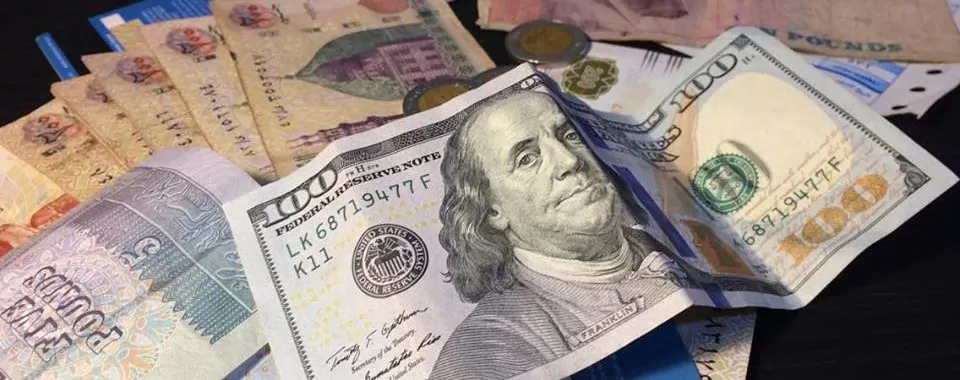
In today’s world, money has no “inherent” value—that is, it has no useful properties other than absolute liquidity, which enables people to obtain anything of value into ownership. Modern society creates money at its own discretion, without being tied to reserves of gold or any other commodities that need to be obtained. This type of money is called fiat money.
As a result, money’s value and purchasing power fully and completely depend on the maturity of the society that created and acknowledged this money.
Monetary systems of the developed and developing countries have different risks. In developed countries, risks of deflation and currency overvaluation often exist, while in developing countries, on the contrary, inflation and devaluation risks exist. Now that we have defined money as a social institution, we can visualize how it works.
Developed economies continuously produce large amounts of goods and services because their production institutions are efficient and stable. At the same time, these societies are so well-organized that each person can be confident that his or her ownership rights, including the right to use money, are reliably protected from any outrage, including that of the authorities.
Having money in such a society means that a person can at any time acquire the product or service he or she needs. This ability warrants that a money owner will not be stripped of his or her economic rights in this society, even if he or she temporarily ceases to receive income for one reason or another.
This motivates people to own money that, in this society, guarantees protection; money is taken out of circulation, which leads to shortcuts in cash flows, i.e. decreased revenues to companies that, in turn, start to save money, which leads to salary cuts etc..—as a result, the economy shrinks, leading to recession and falling prices.
The picture is quite different in the developing countries. As a rule, their economic system is weak and does not ensure stable and guaranteed production of goods and services. Besides, confidence is low and institutions are weak in such societies. People cannot be sure that the economy will be stable and that the government will reliably support money’s purchasing power. In this situation, people seek to get rid of their money, rather than accumulate it. They prefer to buy real estate or durable goods. This pushes prices up. Should the government or the bank system bring to market massive amounts of money, people who do not trust the stability of their national currency typically seek to acquire money issued by other reliable countries.
For this reason, this latter money is referred to as reserve currencies and serves as the basis of the world financial system. Now we can say why: countries issuing reserve currencies have strong organized societies and stable institutions. They are a kind of a warranty of the stable world order. In fact, they sell their institutions, their cultures, their ways of life in exchange for raw materials and industrial goods of the developing countries.
True reinforcement of the developing countries’ currencies is possible only through their institutional development. The larger and the more stable the flow of goods and services generated by a nation’s economic institutions, the higher the social confidence, the more people seek to accumulate their national money and, hence, the more stable the nation’s financial system.
However, even a strong economy and a well-built society cannot hold developed countries harmless against crises. These countries have their own challenges, and, keeping in mind their impact on the rest of the world, we will dedicate this book to them.