
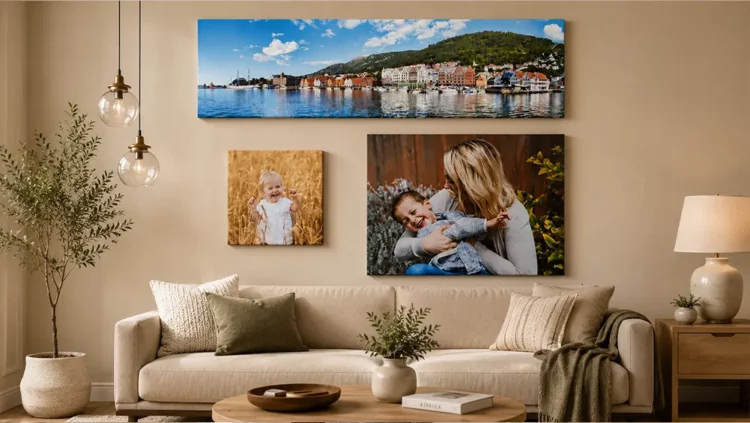
Turning a cherished photograph or digital artwork into high quality canvas prints is one of the most effective ways to bring warmth, texture, and personality to your living space. Canvas wall art captures light without harsh glare and gives everyday photos an impressive gallery-worthy look. However, anyone shopping online quickly notices a vast difference in prices across different platforms. A print that costs twenty dollars on one website might cost eighty on another for the exact same dimensions. This naturally leads to an important question: what actually creates that price difference, and is a premium canvas worth the investment?
The truth is that not all canvas prints are constructed with the same care or materials. Behind the finished image lies a combination of substrate quality, ink formulation, framing technique, and stretching precision. A budget print may look reasonable on the day it arrives, but within two or three years, colors begin to fade, fabric sags, and cheap frames warp under subtle moisture changes. If you want wall decor that maintains its original depth and sharpness for decades, understanding production standards is key. Here are seven fundamental factors that define a superior canvas print.
1. The Base Material: Pure Cotton vs. Synthetic Blends
Every lasting canvas print begins with the fabric itself, known in the industry as the substrate. Low-cost manufacturers rely heavily on 100% synthetic polyester because it is inexpensive and smooth. While polyester holds bright colors reasonably well, it often lacks the authentic woven texture and organic feel associated with real fine art canvases.
Premium manufacturers prefer heavyweight pure cotton or balanced poly-cotton blends that absorb ink deeply into the fibers. Beyond fiber composition, fabric weight—measured in grams per square meter (GSM)—is crucial. High-grade options use 350 to 400 GSM fabrics for structural strength. When sourcing custom artwork from trusted decor providers like CANVASDISCOUNT, checking these substrate specifications ensures that your print will remain tight and resilient over time without sagging or tearing under room temperature fluctuations.
2. Archival Pigment Inks vs. Solvent Inks
The chemistry of the ink determines whether your wall art preserves its rich hues or washes out into a dull blur. Discount printing services often use dye-based or solvent-based inks that break down rapidly under indoor light exposure. Over time, solvent inks can cause delicate skin tones to shift into unnatural tints and release mild chemical odors.
Top-tier prints use archival pigment inks, including UV-resistant latex formulations. Pigment particles lock tightly into fabric threads, delivering high contrast, deep black levels, and exceptional longevity. Under normal indoor display conditions, pigment prints can retain color accuracy for 70 to 100 years.
3. Giclée Printing Technology and Resolution
Even high-grade canvas and archival inks require advanced printing hardware. Standard commercial printers use basic four-color setups that struggle with subtle gradients, soft skin tones, and delicate shadow detail, leading to pixelation or harsh grain.
Professional print studios rely on Giclée technology utilizing 8 to 12 color ink systems. These specialized systems spray microscopic ink droplets with absolute precision. Paired with a high-resolution file (300 DPI at full print dimensions), Giclée printing delivers smooth transitions, crisp lines, and realistic photographic depth.
4. Kiln-Dried Solid Wood Frames vs. Cheap MDF
The internal support frame—known as the stretcher bar structure—is vital for preserving the shape of your art. Budget options frequently use glued particle board or Medium-Density Fiberboard (MDF). MDF is sensitive to atmospheric moisture, causing frames to bend or bow over time, which leaves ugly ripples across the canvas face.
Quality craftsmanship calls for solid natural timber such as pine or spruce that has been thoroughly kiln-dried. Kiln-drying removes internal moisture, preventing wood from twisting or shrinking later. Additionally, properly profiled stretcher bars feature a raised outer bevel to keep the timber face from pressing directly against the front fabric.
5. Precise Hand-Stretching and Corner Craftsmanship
Mounting fabric onto a wood frame requires a careful touch. Automated machinery applies static tension, which can over-stretch corners—causing fine cracks in the print—or leave uneven slack in the center.
Skilled technicians stretch canvas by hand, making micro-adjustments for optimal tension across all four sides. Look for neatly folded, hospital-style corner folds without bulky bunching. Clean back stapling and dust-protective backing tape further indicate meticulous craftsmanship.
6. Protective UV Clear Coatings
An uncoated canvas remains susceptible to dust accumulation, accidental scuffs, moisture stains, and subtle fading from sunlight. Premium manufacturers apply an acrylic varnish or clear protective coating once the inks settle.
This invisible barrier seals the print, shields against UV rays, and increases scratch resistance. It also allows you to clean the surface safely with a dry or slightly damp microfiber cloth without smudging ink.
7. Rigorous Production Expertise & Quality Checks
Ultimately, long-lasting quality relies on professional oversight. From image file pre-checks to final hand-assembly and secure packaging, dedicated quality control ensures every piece leaves the studio in pristine condition.
Quick Reference: Low Quality vs. High Quality Canvas Prints
| Feature | Low Quality (Budget) | High Quality (Premium) |
| Fabric Material | Thin Polyester (<250 GSM) | Heavyweight Poly-Cotton / Cotton (350+ GSM) |
| Ink Formulation | Dye or Solvent Inks (Fades fast) | Archival Pigment / Latex Inks (70+ years) |
| Internal Framing | MDF / Particle Board (Warps easily) | Kiln-Dried Solid Pine / Spruce Wood |
| Stretching & Edges | Uneven Machine Tension, Loose Corners | Balanced Hand-Stretched with Clean Corners |
| Protection | Raw / Uncoated Surface | UV-Resistant & Scratch-Proof Varnish Coating |
Final Thoughts
Choosing fine canvas decor is an investment in your home atmosphere. While lower price tags can be enticing, compromise on materials leads to premature fading, loose fabric, and warped frames.
By insisting on kiln-dried timber, archival pigment inks, heavyweight cotton substrates, and protective coatings, you ensure your chosen artwork remains as vivid, crisp, and structural years from now as the day it was hung.