
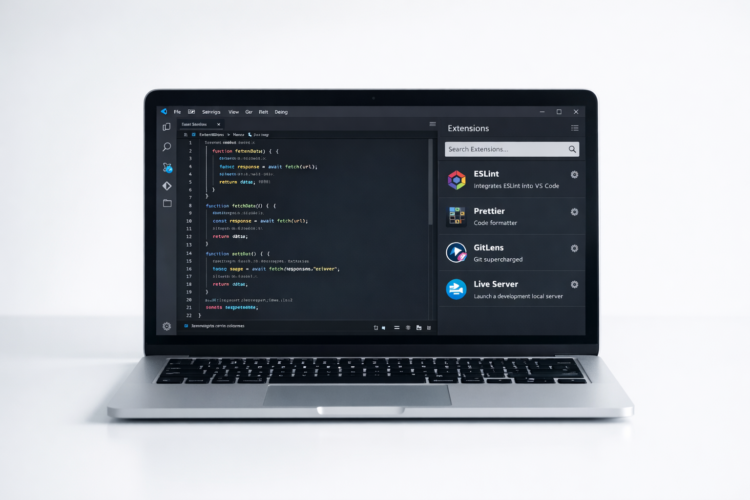
Productivity tools play a crucial role in the ever-evolving field of software development. As developers strive to optimize their workflows, the integration of these tools becomes increasingly important. This article delves into the significance of code extensions in transforming development environments.
In today’s competitive tech industry, productivity is paramount for software developers. The ability to streamline processes and enhance efficiency can make a significant difference in the quality and speed of development projects. One of the ways developers achieve this is through the use of productivity tools, particularly in integrated development environments (IDEs). Among these, vs code extensions stand out as essential components that enhance functionality and customize the coding experience to better meet individual or team needs.
Understanding How Code Extensions Function in IDEs
Code extensions are add-ons or plugins designed to augment the capabilities of an integrated development environment. They allow developers to tailor their coding workspace, adding features that are not available by default. These extensions cover a wide range of functionalities, from syntax highlighting and auto-completion to debugging and version control. By integrating these tools into their IDEs, developers can work more efficiently, spending less time on repetitive tasks and more on solving complex problems.
The general purpose of code extensions is to simplify the development process. They do so by automating mundane tasks, providing visual aids, and improving overall code readability. For instance, many extensions offer linting features that help identify errors before running the code, saving valuable time during testing phases. As a result, extensions not only enhance productivity but also contribute to producing higher quality code.
Key Benefits of Using Code Extensions
The primary advantage of using code extensions lies in their ability to boost efficiency. By reducing manual input through automation and smart suggestions, developers can focus on more critical aspects of their work. Extensions also improve code quality by offering real-time feedback on syntax errors or potential bugs, allowing for immediate corrections. This proactive approach minimizes the risk of errors propagating through different stages of development.
Another benefit is how these tools streamline developer workflow. By integrating seamlessly into existing IDEs, they facilitate easier project management and collaboration among team members. Many modern extensions support version control systems, which are crucial for maintaining consistent progress across large teams working on shared projects. With such tools at their disposal, developers can navigate complex codebases with greater ease and confidence.
Popular Types of Code Extensions and Functions
A variety of code extensions have gained popularity due to their impactful functionalities. Among them are those that enhance syntax highlighting, which helps developers quickly identify different parts of their codebase through color coding. This feature alone significantly reduces cognitive load during coding sessions. Another common type focuses on improving code navigation by providing quick access to definitions or references within large projects.
Furthermore, there are extensions that offer integrated terminal functionalities directly within the IDE environment. This integration allows developers to execute commands without leaving their coding interface, improving efficiency by minimizing context switching. With these enhancements readily available, code extensions enable developers to create a more cohesive and productive development experience.
The Influence of Extensions on Modern Practices
Extensions have significantly influenced modern software development practices by encouraging an ecosystem where customization leads to optimized workflows. Developers now have the freedom to configure their environments precisely according to project requirements or personal preferences. This adaptability fosters innovation and experimentation as new tools can be tested and adopted with ease.
The trend towards using code extensions reflects a broader movement within the tech industry towards modularity and flexibility in tool usage. As these tools continue to evolve alongside development methodologies, their significance in shaping efficient practices will only increase. The availability of diverse functionalities within code extensions has already made a lasting impact on how software projects are executed today.